

Your team works hard. But something keeps slowing them down.
Files get lost. Emails go to the wrong people. Simple tasks take twice as long as they should.
The cause is often not effort. It is a skills gap.
Here is how to spot it, and how to close it without stopping the work.
Why this matters
The World Economic Forum’s Future of Jobs Report 2025 found that employers see skills gaps as the biggest barrier to business transformation.
In plain words: the tools keep changing, and teams that learn faster move faster.
6 signs your team needs training
- The same mistakes repeat every month.
- Only one or two people know how the tools work.
- Simple tasks need a lot of back and forth.
- Customers wait because staff are unsure what to do.
- New software is bought, but few people use it well.
- People avoid digital tasks or do them by hand.
How to run training without slowing work
1. Start with the real tasks
List what each role does every day. Train on those tasks first.
2. Check where people are
A short skills check shows who needs the basics and who is ready for more.
3. Train by role, in small groups
A receptionist and an accountant need different things. Small groups get more attention.
4. Use short sessions
Sessions of 60 to 90 minutes are easier to fit into a work week than full days.
5. Practice on real work
Let people use their own files, forms and systems in class. They go back to work already using it.
6. Name a champion in every team
One confident person per team can answer quick questions and keep habits alive.
7. Measure before and after
Pick two or three numbers to track, such as time per task, errors, or customer waiting time.
A real example: FLC Hospital
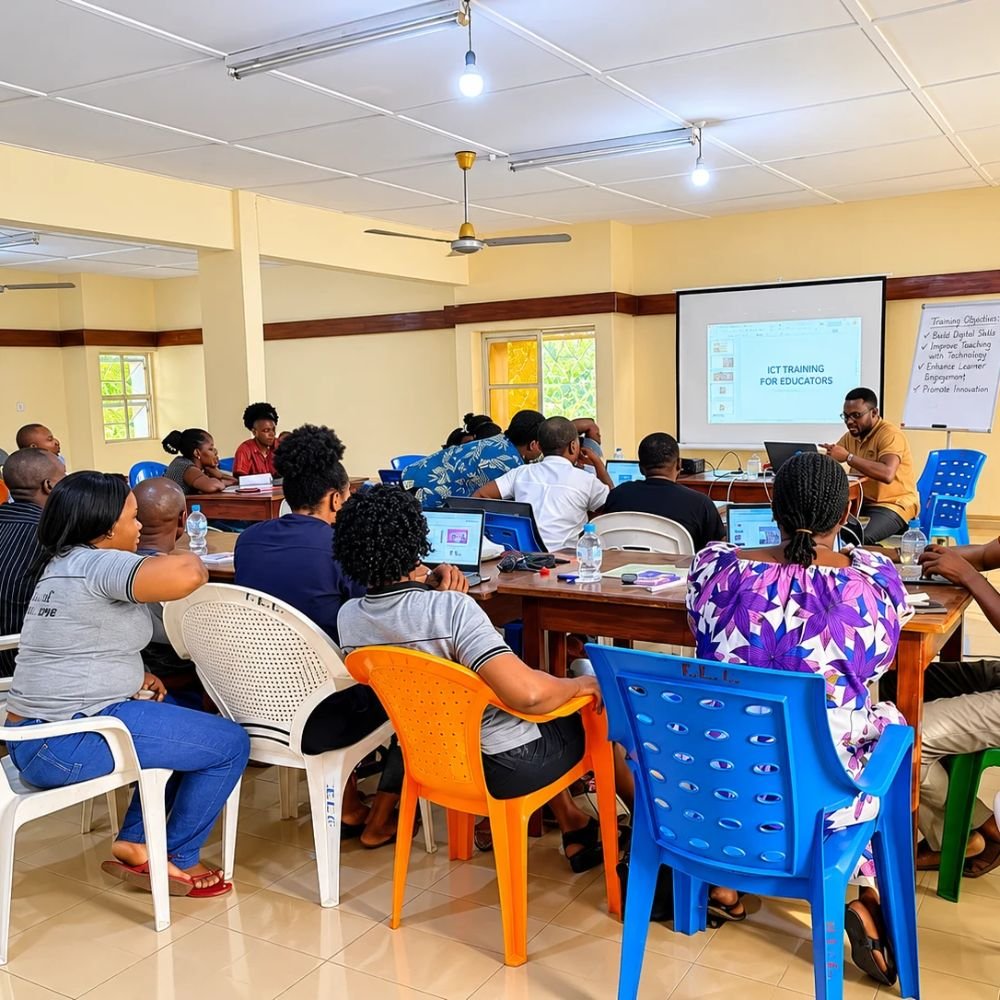
FLC Hospital asked LAskill to train its staff.
Here is what the program looked like:
- It ran for 3 months at the hospital’s own facility.
- 100 staff took part, from every department.
- It covered digital skills training and customer relations management, including how to welcome patients and care for them.
Training at the hospital’s own site meant staff learned in the place where they work.
How to measure whether training worked
- Before and after: Time how long a key task takes before training and after.
- Errors: Count mistakes in a normal month, then again after training.
- Customer feedback: Ask customers or patients about their experience.
- Staff confidence: Ask staff to rate their own confidence from 1 to 5, before and after.
Who we train
We train teams, organizations, brands, marketing teams, churches, communities and school departments.
We can run sessions at your location or online. We shape the training to your people and your tools.
Your next step
Choose one:
- Talk to us about training for your team. We reply within 24 hours on weekdays.
- Read the guide for small business owners.
- Explore our courses for individual staff.
- Join our community to learn from other teams and leaders.
Quick answers
How long should team training take?
- It depends on the starting level. The hospital program ran for 3 months, with an intensive at the end.
Can training happen online?
- Yes. We teach live online, with recorded video, and in person.
Will training disrupt our work?
- Short sessions on real tasks keep disruption small.
Sources
- World Economic Forum, Future of Jobs Report 2025.